
Filmi 23!
Filmi Toronto’s South Asian Film Festival – 23 Years!
December 6th – 7th, 2025
Stay tuned for some great films!
21st Filmi: Toronto’s South Asian film festival
Harbourfront Centre
 |
Click here to Reply or Forward
|
Filmi 23!
Filmi Toronto’s South Asian Film Festival – 23 Years!
December 6th – 7th, 2025
Stay tuned for some great films!
21st Filmi: Toronto’s South Asian film festival
Harbourfront Centre
|
Click here to Reply or Forward
|



















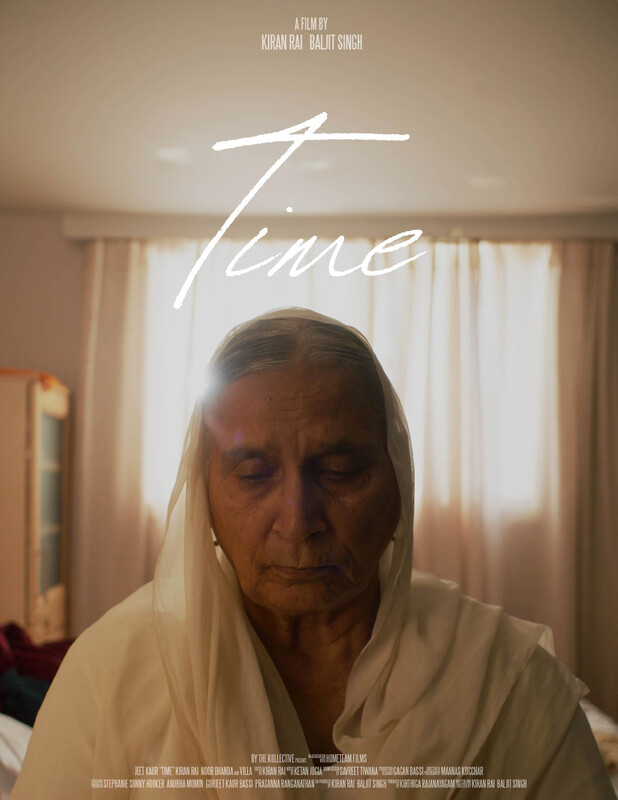
After losing her husband to dementia, Surjit becomes consumed by her grief. Her days are spent trying to pass the time, finding ways to cope with loss. The best part of her week is when her grandchildren come to visit. She seeks solace reflecting on memories of her younger days. Although restricted by her anxiety, she tries to search for peace within her loneliness. Surjit’s yearning for companionship leads her to a group of elderly women who often gather at a park. What does life look like when you have to forge new friendships at the age of 70? Time explores life after loss.

Director Biography – Kiran Rai, Baljit Singh
Kiran Rai, also known by her creator name KayRay, is an actor and filmmaker based out of Toronto. Throughout the past decade, Kiran has used her platform to primarily focus on addressing taboos within the South Asian community through short films, documentaries and digital series. Her short films, Ananke (garnered over 1 million views on YouTube) and Haneri have gone on screening tours around the world, and have often been used by University / College curriculums as a reference tool. This led her to co-produce and star in 28 episodes of the hit digital-series, Anarkali which reached approximately 2 million views across all seasons. The Brown Bachelorette, the parody web-series which Kiran starred, co-wrote and directed, helped cultivate her comedic screenwriting. Through her satirical yet didactic content she has been able to create meaningful and critical dialogue through her work. She is now the co-founder of The Kollective, a BIPOC focused creative agency and production company that aims to create opportunities for artists while supporting small businesses. And though her passion is in the arts, her heart is centred around community and mental health, which is why she has facilitated and hosted over 50+ workshops around the world. With her talk show Cha Da Cup With KayRay now airing on Brit Asia TV, her work continues to be recognized by the likes of Vogue, The Toronto Star, NBC News, BBC, CBC and Cosmopolitan.
Baljit Singh is an analog photographer who has evolved into a compelling storyteller through cinematography, graphic design and writing. Committed to documenting and narrating stories focused on people of colour, her work infuses nostalgia with a modern twist, eventually having branched out to film, digital series and documentaries. Baljit has also played a key role in branding various artists, businesses, and events. As the co-founder and executor of THE KOLLECTIVE, based in Toronto, she strives to reinvent and produce high-quality work aligned with a shared vision. Her work actively contributes to international exhibitions and has been featured in prestigious publications worldwide, including Vogue, Cosmopolitan, Elle, Toronto Life and USA Today.
Director Statement
Our grandmothers, who are remarkable women of strength and resilience, have left an indelible mark on our lives. We have the privilege of knowing them intimately, of being nurtured by their love, and witnessing their unwavering courage in the face of adversity. The profound grief they endured upon losing their husbands, our grandfathers, resonated deeply with us. Getting married at such a young age, being a wife, a mother, and a grandmother was all they’ve ever known. When they lost their partners, in turn, they lost a sense of themselves.
Time finds its roots in the inspiring journey of my naniji (ਨਾਨੀਜੀ translation: maternal grandmother), Surjit Kaur. Known for her fierce spirit and boundless love within her community, she epitomized independence despite suffering through her own pain throughout her life. Growing up with the name Jaitno, her identity underwent a significant transformation upon marriage to my grandfather, who changed her name to Surjit (ਸੁਰਜੀਤ translation: immortal). This symbolic change reflected not only a shift in her marital status but also in her sense of self.
Living a humble life in Punjab, Surjit faced grief early on, losing many loved ones by the tender age of 20. However, her resilience knew no bounds. She embarked on a new chapter in Canada with my grandfather and their children, working tirelessly to support her family until her early retirement. Her selflessness became most evident when my grandfather battled cancer, as she assumed the role of a caregiver with unwavering dedication, even learning to drive to ensure he received proper care. Despite the heartbreaking loss of my grandfather, Surjit continued to persevere, finding solace in her friendships, her family, and discovering who she is outside of being a caretaker. Although she is no longer with us, I don’t think she ever realized how much of an inspiration she continues to be for me. She showed us that life doesn’t have to end after you become a widow, a controversial cultural mindset most South Asian elderly carry.
My paternal grandmother, Avtar Kaur, also played a pivotal role in shaping my understanding of strength and resilience. Living with my family throughout my life, our bond grew stronger, particularly in her later years as I delved into her past, discovering the depth of her experiences before and after marriage. Her recent passing due to Covid-19 left a void in our lives and reminds me of the impact our elders have on us.
Baljit Singh, my co-director and producing partner in this film, shares a deep connection with her own grandmothers. We often worked on projects together where we would feature our elders. Our main character in this film is played by Baljit’s naniji, Jeet Kaur, who had a hidden talent waiting to be discovered. Through the lens of our personal experiences, we aim to shed light on the often-overlooked narratives of elders, especially surrounding the universal theme of grief. We want to honour these stories that often get lost when they are no longer with us.
For anyone that has felt a deep connection to their grandparents or an aging parent, we hope our film can offer a sense of comfort and healing.

 23rd Filmi: Toronto's South Asian Film Festival Dec 6-7 2025
